
Floods are among the most powerful symbols found in human storytelling. Across mythology, religion, literature, psychology, art, and popular culture, a flood can represent destruction, emotional overwhelm, purification, judgment, transformation, rebirth, chaos, or renewal.
Its meaning depends heavily on context: a destructive flood may symbolize loss and disorder, while receding waters can represent recovery, cleansing, or the beginning of a new chapter.
The symbolism of floods remains compelling because water itself has an unusual duality. It sustains life, yet in excessive quantities it can become destructive. A flood therefore captures a fundamental human experience: something necessary and familiar suddenly becomes overwhelming.
Featured Snippet Answer:
Flood symbolism commonly represents overwhelming change, destruction, emotional intensity, purification, judgment, transformation, and renewal. In religious and mythological traditions, floods may mark the end of one world and the beginning of another. In psychology and literature, they can symbolize emotions, circumstances, or changes that feel impossible to control.
What Does a Flood Symbolize?
A flood can symbolize several interconnected ideas:
- Destruction — the collapse of structures, routines, or established orders.
- Chaos — the breakdown of boundaries and predictability.
- Emotional overwhelm — feelings becoming too powerful to contain.
- Purification — washing away what is old, corrupt, or unwanted.
- Judgment — consequences imposed on wrongdoing or disorder.
- Transformation — a major transition from one state of existence to another.
- Rebirth — the possibility of beginning again after devastation.
- Renewal — fertile or cleansed conditions following the disappearance of what came before.
- Loss of control — circumstances exceeding an individual’s ability to manage them.
- Collective crisis — an event affecting an entire community rather than one person.
These meanings are not interchangeable. The same flood can represent destruction in one story and renewal in another.
That distinction is essential when interpreting symbolism.
Why Are Floods Such Powerful Symbols?
Floods are visually dramatic and physically consequential. They alter landscapes, erase boundaries, interrupt transportation, damage homes, and change familiar environments.
Symbolically, this makes the flood particularly useful for communicating radical change.
A wall can represent a boundary. A road can represent direction. A house can represent security. When water overwhelms all three, those established meanings are disrupted.
Flood symbolism therefore often revolves around the question:
What happens when something becomes too powerful for existing boundaries to contain?
That question can apply to emotions, political or social upheaval, spiritual transformation, natural disasters, relationships, technological change, or personal crises.
Historical Origins of Flood Symbolism
Flood stories appear in numerous ancient traditions. They should not automatically be treated as versions of one universal story, because cultures developed their own narratives in different historical and environmental contexts.
Flood myths are particularly prominent in traditions associated with river civilizations and societies familiar with seasonal flooding, though the symbolic meanings attached to them differ considerably.
Ancient flood narratives often combine several themes:
- A world or society becomes disordered.
- A catastrophic flood occurs.
- Survival depends on preparation, divine favor, or extraordinary circumstances.
- The old order disappears.
- A new stage of existence begins afterward.
This narrative pattern gives the flood unusual symbolic flexibility.
It can be simultaneously an ending and a beginning.
Flood Symbolism in Mesopotamian Tradition
Some of the earliest surviving written flood narratives come from ancient Mesopotamia.
The Epic of Gilgamesh contains a famous flood account involving Utnapishtim, who is warned of an impending catastrophe and instructed to preserve life.
The flood functions within a broader narrative involving mortality, divine power, survival, and the limits of human beings.
Earlier Mesopotamian traditions also contain flood narratives, demonstrating that the motif developed across multiple texts and periods rather than originating from a single literary source.
What does the Mesopotamian flood represent?
Depending on the particular text and interpretation, it can involve ideas of:
- divine authority
- mortality
- destruction
- survival
- preservation
- human vulnerability
- the relationship between humans and gods
Flood Symbolism in the Bible
The biblical story of Noah’s Flood is one of the most influential examples of flood symbolism in Western religious and literary culture.
In Genesis, the flood is connected with divine judgment and the destruction of widespread human corruption. Noah and his family survive through the ark.
After the waters recede, the narrative moves toward restoration and covenant, symbolized by the rainbow.
This gives the flood several interconnected meanings:
Judgment → destruction → survival → renewal → covenant
The story therefore demonstrates why flood symbolism cannot be reduced simply to “death” or “destruction.”
The flood destroys an existing order while the narrative ultimately moves toward a renewed relationship between humanity and God.
Flood Symbolism in Other Religious and Cultural Traditions
Flood narratives occur in many cultural contexts, but their details and meanings vary.
| Tradition or cultural context | Flood-related themes |
| Ancient Mesopotamia | Divine power, catastrophe, survival, mortality |
| Hebrew Bible | Judgment, preservation, covenant, renewal |
| Greek mythology | Destruction, survival, restoration |
| Hindu traditions | Cosmic cycles, preservation, renewal, divine intervention |
| Indigenous traditions | Vary widely; some include ancestral, ecological, or transformative flood narratives |
| Chinese traditions | Flood control, social order, leadership, environmental management |
| Literature and modern fiction | Psychological crisis, social collapse, transformation |
These traditions should not be treated as interchangeable. A flood story’s meaning depends upon the worldview, historical setting, religious framework, and cultural experience in which it developed.
Flood Symbolism in Greek Mythology
Greek mythology contains a flood narrative associated particularly with Deucalion and Pyrrha.
In the story, a great flood destroys much of humanity, while Deucalion and Pyrrha survive.
Their survival and subsequent restoration of humanity give the flood a strong association with renewal after catastrophe.
The symbolic sequence is particularly important:
Old humanity → destruction → survival → regeneration
The flood becomes a mechanism through which the world can be reset.
Flood Symbolism in Hindu Traditions
Flood narratives also appear within Hindu traditions, including the story of Manu and the great flood.
The account is associated with preservation and divine intervention. Manu is warned of an approaching flood and takes measures that enable survival.
The story can therefore be read through themes such as:
- preservation of life
- divine guidance
- cosmic cycles
- renewal
- transition between world orders
However, Hindu religious traditions are diverse, and interpretations can differ according to textual and philosophical context.
Flood Symbolism in Chinese Cultural History
Floods have also held distinctive significance in Chinese history and mythology.
The legendary Great Flood associated with Yu the Great is especially notable because the narrative emphasizes controlling and managing water rather than simply escaping it.
This creates a different symbolic emphasis.
Instead of the flood being primarily a story of destruction followed by rescue, water management can represent:
- leadership
- perseverance
- engineering
- social responsibility
- order imposed upon chaos
- cooperation between human communities and the environment
This is a useful reminder that flood symbolism is not universal in a single fixed sense.
The cultural response to water can shape the symbolic meaning attached to it.
Psychological Meaning of Flood Symbolism
In psychological and everyday symbolic interpretation, floods frequently represent emotional overwhelm.
Someone may describe themselves as being “flooded” by:
- grief
- anxiety
- anger
- responsibilities
- memories
- relationship problems
- information
- sudden change
The metaphor works because water provides an intuitive image for something that exceeds containment.
Example
Imagine dreaming about water rising inside your home.
A symbolic interpretation might associate:
- home with personal security or private life
- water with emotion or change
- rising water with increasing pressure
- loss of dry ground with reduced stability
But dream interpretation is not a precise diagnostic science. A flood dream does not automatically mean that a person is emotionally overwhelmed.
Personal associations matter.
For one person, water may symbolize fear. For another, it may represent freedom, spirituality, nature, or renewal.
Flood Symbolism in Dreams
Flood dreams are particularly common in popular discussions of symbolism.
Possible interpretations include:
1. Emotional Overload
A flood may represent feelings that seem difficult to contain.
2. Major Life Changes
Rising water can symbolize circumstances changing faster than expected.
3. Loss of Control
Being carried away by water may represent an experience in which personal control feels limited.
4. Cleansing
Clear water moving through a landscape may be interpreted as a symbolic release or purification.
5. Transformation
A flooded environment can represent the disappearance of an old situation before something new emerges.
6. Fear and Uncertainty
Dark, dangerous, or rapidly rising water may reflect fear within the dream narrative.
The most useful interpretation considers what happened in the dream and how the dreamer experienced it, rather than assigning one universal definition.
Spiritual Meaning of Floods
Spiritually, flood symbolism frequently involves transformation.
Water is often associated with cleansing, life, mystery, and spiritual renewal. A flood intensifies these associations.
A spiritual flood can therefore symbolize:
- purification
- surrender
- divine power
- spiritual awakening
- removal of the old
- preparation for transformation
- rebirth
Yet spiritual interpretations should be distinguished from empirical claims.
If someone interprets a flood as a spiritual message, that is a belief-based interpretation, not something that can automatically be established as an objective fact.
Flood Symbolism and Purification
One of the most interesting aspects of flood symbolism is its connection with cleansing.
Ordinary water can wash away dirt.
Symbolic water can therefore represent the removal of:
- corruption
- guilt
- outdated beliefs
- past identities
- negative experiences
- social disorder
But a flood is not a gentle cleansing.
It is excessive.
This makes flood symbolism especially appropriate when a narrative depicts radical purification rather than gradual improvement.
Flood Symbolism as Judgment
Flood narratives often connect water with judgment.
This is especially prominent in religious traditions where divine authority determines that an existing order has become unacceptable.
Symbolically, the flood then represents consequences on a massive scale.
The metaphor can be summarized as:
Corruption → judgment → destruction → restoration
However, not every flood narrative contains moral judgment.
A natural disaster may simply represent nature’s power, while a fictional flood may symbolize political instability or psychological pressure.
Context determines meaning.
Flood Symbolism and Rebirth
Perhaps the most important paradox of flood symbolism is that destruction can create the conditions for renewal.
After a flood, the landscape may be changed permanently.
In symbolic storytelling, this can represent a person or society emerging from crisis with a transformed identity.
The flood therefore becomes a threshold symbol.
It separates:
Before | After
This makes floods especially effective in stories about:
- coming of age
- spiritual transformation
- social revolution
- personal recovery
- historical change
- ecological transformation
Flood Symbolism in Literature
Writers use floods because they can communicate enormous amounts of meaning through a single image.
A flood can physically change a setting while simultaneously representing an internal or social transformation.
Common literary functions include:
Atmosphere:
Floodwater can create suspense, fear, isolation, or uncertainty.
Character development:
A character surviving a flood can symbolize resilience.
Social commentary:
A flood can represent the collapse of political or economic systems.
Emotional metaphor:
Rising water can parallel rising emotional tension.
Transformation:
A flooded landscape can separate one phase of a narrative from another.
Apocalypse:
Flooding can represent civilization’s collapse.
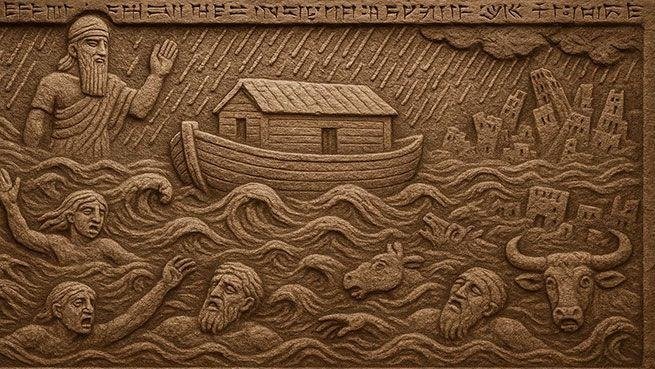
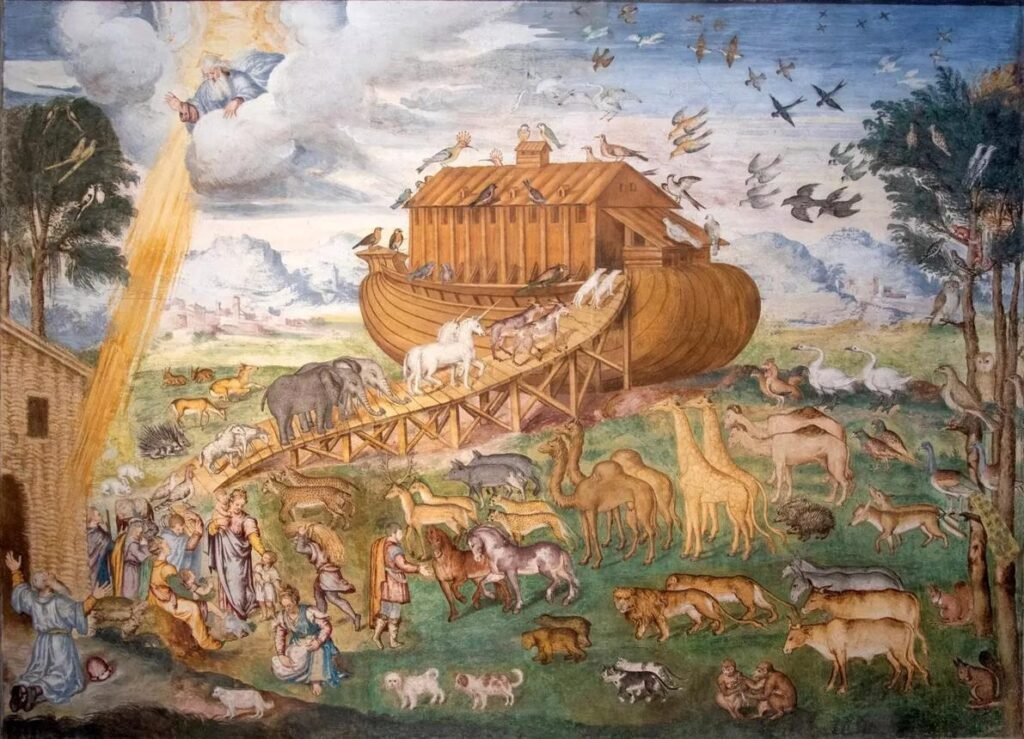
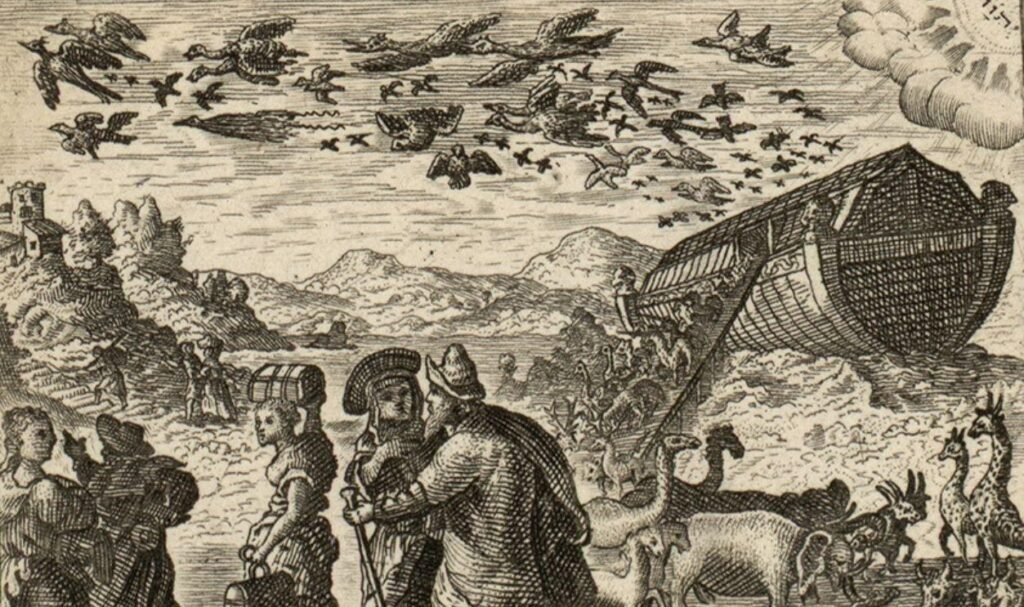
Flood Symbolism in Art
Artists have long used water to communicate both beauty and danger.
Flood imagery can depict:
- human vulnerability
- divine judgment
- environmental destruction
- social catastrophe
- chaos
- sublime natural power
- survival
- hope
The visual impact of floodwater comes partly from its ability to transform familiar spaces.
A flooded street is recognizable but strange.
A flooded home is simultaneously a shelter and an endangered structure.
This visual contradiction creates powerful symbolism.
6
Flood Symbolism in Film and Popular Culture
Modern filmmakers frequently use floods as visual metaphors.
A flood can represent the collapse of an individual’s world or the breakdown of civilization.
Common cinematic associations include:
- apocalypse
- climate crisis
- disaster
- emotional collapse
- social instability
- technological vulnerability
- survival
- rebirth
Because audiences immediately understand the physical danger of rising water, filmmakers can communicate abstract concepts without lengthy explanation.
Flood Symbolism in Architecture and Design
Flood imagery can also influence visual communication.
Designers may use water imagery to communicate:
- environmental awareness
- climate change
- urgency
- instability
- cleansing
- renewal
- movement
However, context is crucial.
A tourism campaign might use flowing water to suggest vitality.
A climate-awareness campaign might use flooding to communicate environmental risk.
The same visual element can therefore produce dramatically different meanings.
Flood Symbolism in Branding
Brands generally use water imagery carefully because water has both positive and negative associations.
Positive associations
- freshness
- purity
- life
- renewal
- movement
- naturalness
Negative associations
- danger
- instability
- destruction
- loss of control
A literal flood image is more likely to communicate urgency or environmental concern than luxury or stability.
This makes flood imagery particularly relevant to environmental organizations, disaster-preparedness campaigns, climate communication, and storytelling.
Flood Symbolism and Semiotics
From a semiotic perspective, a flood is more than an image of water.
Its meaning emerges through relationships between signs, cultural knowledge, and context.
Consider a photograph showing water surrounding a house.
The physical image is the sign.
The viewer may associate it with:
- vulnerability
- home
- displacement
- climate change
- loss
- resilience
The meaning is therefore constructed through both the visual evidence and the viewer’s cultural framework.
This is why the same flood photograph can evoke different responses among different audiences.
Flood Symbolism Across Cultures
There is no single universal interpretation of floods.
| Symbolic theme | Possible interpretation |
| Destruction | Existing structures are swept away |
| Renewal | A new beginning follows catastrophe |
| Judgment | Disorder receives consequences |
| Purification | The old is washed away |
| Transformation | Life changes permanently |
| Chaos | Familiar boundaries disappear |
| Emotional overwhelm | Feelings exceed containment |
| Divine power | Human control is limited |
| Environmental warning | Nature’s vulnerability or force |
| Resilience | Survival after catastrophe |
These meanings can overlap.
A single narrative might present the flood as both judgment and renewal, or both destruction and transformation.
Flood Symbolism: Myth vs. Fact
| Myth or assumption | More accurate interpretation |
| Every flood symbolizes death | Floods can represent death, transformation, renewal, or many other ideas |
| Flood dreams always mean emotional problems | Dream symbolism is highly personal and cannot be interpreted universally |
| All cultures interpret floods identically | Flood narratives vary significantly across traditions |
| Flood symbolism is exclusively religious | It also appears in literature, psychology, art, film, advertising, and environmental communication |
| Water is always positive symbolism | Water can represent both life and destruction |
| A flood always represents punishment | Some traditions emphasize preservation, renewal, environmental forces, or human responsibility |
Common Mistakes When Interpreting Flood Symbolism
Mistake 1: Assuming one universal meaning
Symbolism is contextual.
Mistake 2: Treating mythology as historical documentation
A myth can be culturally and religiously important without functioning as modern historical evidence.
Mistake 3: Confusing symbolic belief with scientific evidence
A spiritual interpretation should be identified as spiritual rather than presented as an empirical fact.
Mistake 4: Ignoring the aftermath
The meaning of a flood often depends on what happens afterward.
Does the story end in destruction?
Does life return?
Does a new society emerge?
The aftermath may reveal the flood’s central symbolic function.
Mistake 5: Ignoring personal experience
Someone who has experienced an actual flood may associate the symbol primarily with trauma or loss, while another person may associate it with renewal or mythology.
Did You Know?
The flood is unusual as a symbolic image because it combines two apparently opposing concepts: destruction and renewal.
Water is essential to life, but excessive water can destroy homes, landscapes, and communities.
That contradiction helps explain why flood symbolism has remained powerful across thousands of years of storytelling.
Expert Tip: Interpret the Flood in Context
When analyzing flood symbolism, ask five questions:
- What is being flooded?
- Where did the water come from?
- Who is affected?
- Does anyone survive?
- What happens after the water disappears?
These questions often reveal more than simply asking, “What does a flood symbolize?”
Practical Applications of Flood Symbolism
Understanding flood symbolism can help in several fields.
Writing and Storytelling
Writers can use floods to represent a turning point or irreversible transformation.
Education
Teachers can use flood narratives to explore mythology, cultural identity, environmental history, and comparative literature.
Art
Artists can use flood imagery to investigate vulnerability, nature, mortality, and renewal.
Film
Directors can use water to externalize emotional or social instability.
Branding
Organizations can use flood imagery to communicate environmental risks, emergency preparedness, or climate-related concerns.
Psychology and Personal Reflection
Flood imagery can provide a metaphor for experiences of being overwhelmed, although symbolic reflection should not be confused with clinical diagnosis.
Environmental Communication
Flood imagery can communicate the consequences of extreme weather, displacement, infrastructure vulnerability, and environmental change.
Key Insights About Flood Symbolism
The most important ideas can be summarized through several symbolic oppositions:
Flood ↔ Boundary
Water crosses boundaries and changes established spaces.
Flood ↔ Control
Flooding can represent circumstances exceeding human control.
Flood ↔ Destruction
The old structure may disappear.
Flood ↔ Purification
What existed before can symbolically be washed away.
Flood ↔ Transformation
The landscape or person may emerge fundamentally changed.
Flood ↔ Rebirth
After destruction, a new order can appear.
This makes the flood one of the strongest threshold symbols in human storytelling.
Frequently Asked Questions About Flood Symbolism
What is the main meaning of flood symbolism?
Flood symbolism commonly represents overwhelming change, destruction, chaos, purification, judgment, transformation, or renewal. The exact meaning depends on the story, cultural tradition, religious context, artistic setting, and the events surrounding the flood.
What does a flood symbolize spiritually?
Spiritually, a flood may symbolize purification, divine power, judgment, surrender, transformation, or rebirth. These meanings come from particular religious and spiritual traditions and should be understood as belief-based interpretations rather than universal empirical facts.
What does a flood represent in dreams?
A flood in a dream may be interpreted as emotional overwhelm, major life changes, uncertainty, loss of control, cleansing, or transformation. However, dream symbols do not have one scientifically established meaning for every person. The dreamer’s emotions and personal associations are important.
Why are floods common in mythology?
Floods provide a powerful narrative mechanism for depicting the destruction of an existing world and the possibility of creating a new one. They can also reflect the real significance of water and flooding in societies that depended upon rivers, agriculture, and predictable environmental conditions.
Does a flood always symbolize destruction?
No. Floods can symbolize destruction, but they can also represent purification, renewal, transformation, survival, rebirth, or the beginning of a new social or spiritual order. The aftermath of the flood is often essential to understanding its meaning.
What does flood symbolism mean in literature?
In literature, floods can symbolize emotional overwhelm, social collapse, historical change, mortality, environmental danger, purification, or transformation. Authors often use flood imagery because it can simultaneously affect a physical landscape and represent an internal or cultural transformation.
Final Takeaways
Flood symbolism is powerful because it embodies contradiction.
A flood can destroy and cleanse. It can erase and create. It can represent catastrophe while also opening the possibility of renewal.
Across mythology, religion, literature, psychology, art, film, design, and environmental communication, flood imagery repeatedly raises questions about control, transformation, mortality, resilience, and new beginnings.
Its meaning is never completely fixed. Cultural history, religious tradition, narrative context, personal experience, and visual presentation all influence interpretation.

Daniel Miller is a USA-based content creator dedicated to producing informative, engaging, and easy-to-understand articles designed to provide genuine value.
