
Few creatures embody the tension between water, air, movement, and transformation quite like the dragonfly. It begins life beneath the surface of freshwater, spending months or even years as an aquatic nymph before emerging, shedding its old outer skin, developing functional wings, and taking to the air.
That remarkable life cycle helps explain why dragonfly symbolism has become closely associated with transformation, adaptability, freedom, renewal, and the ability to move from one phase of life into another.
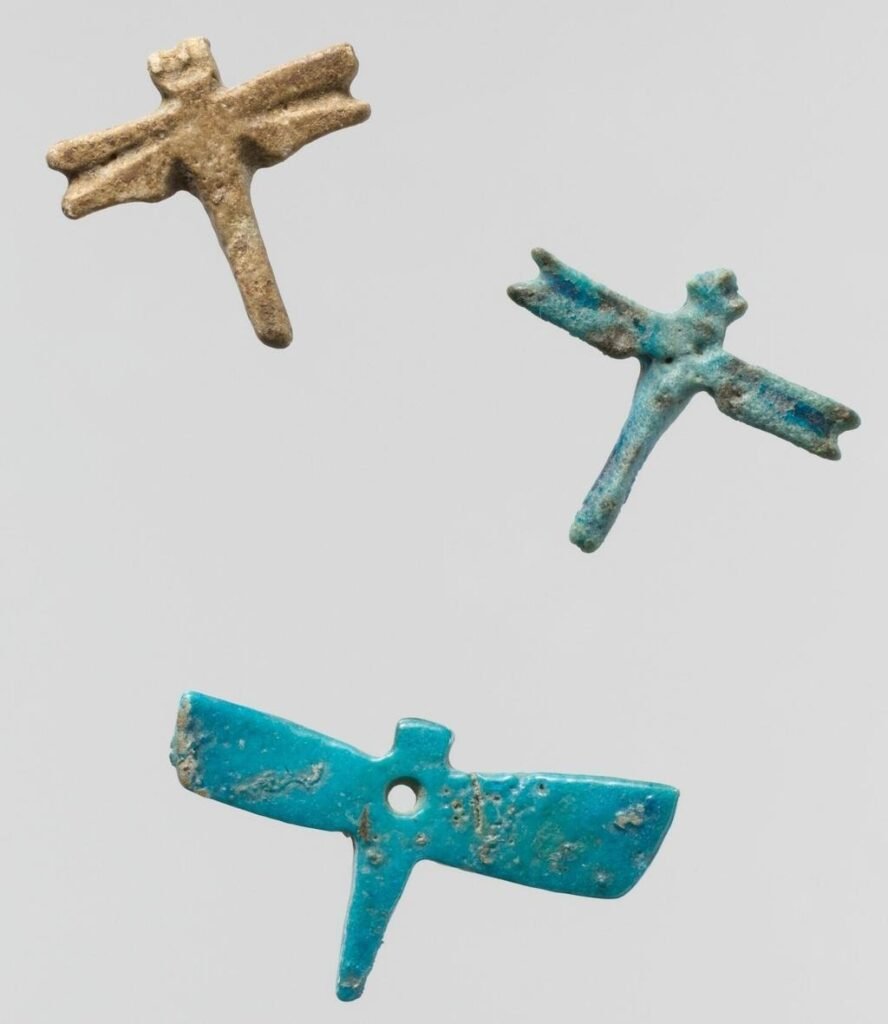
Yet there is no single universal meaning of the dragonfly. In Japan, for example, dragonflies have a strong association with courage, victory, autumn, and samurai culture, while some European and American folk traditions historically gave the insect darker names and supernatural associations. Archaeological evidence also shows that dragonfly imagery is considerably older than modern spiritual symbolism: dragonfly amulets from ancient Egypt date to the Middle Kingdom.
Understanding these differences makes dragonfly symbolism more interesting—not less. A symbol gains meaning through the relationship between its physical characteristics, cultural environment, stories, artistic traditions, and the people interpreting it.
Featured Snippet: What does a dragonfly symbolize?
Dragonfly symbolism commonly represents transformation, change, adaptability, freedom, courage, renewal, and living in the present moment. These meanings are inspired partly by the dragonfly’s aquatic-to-airborne life cycle and remarkable flight. However, its symbolism varies across cultures: Japanese traditions often associate it with courage and victory, while other traditions have interpreted it through folklore, spirituality, or nature.
What Does a Dragonfly Symbolize?
At its broadest level, the dragonfly is a symbol of change and transformation.
Its symbolism can include:
- Transformation — moving from one stage of life to another
- Adaptability — responding successfully to changing circumstances
- Freedom — the ability to move lightly and independently
- Courage — especially in Japanese cultural traditions
- Strength — despite its delicate appearance
- Renewal — beginning again after a significant transition
- Self-realization — seeing beyond an earlier version of oneself
- Perspective — changing how one understands a situation
- Joy and lightness — appreciating movement, beauty, and the present
- Resilience — continuing through lengthy developmental stages
The important point is that these meanings are interpretations, not biological properties of the insect.
Science tells us what dragonflies actually do. Culture turns those observations into metaphor.
That distinction is fundamental to understanding symbolism.
The Natural Origin of Dragonfly Symbolism
Why transformation is the strongest dragonfly metaphor
Dragonflies have an unusual life history.
Unlike butterflies, they do not undergo complete metamorphosis involving a pupal stage. Dragonflies experience incomplete metamorphosis, passing through egg, aquatic nymph, and adult stages. The nymph lives underwater, molts repeatedly as it grows, and eventually leaves the water during its final molt to become a winged adult.
That physical transition naturally lends itself to metaphor.
The dragonfly essentially occupies two dramatically different environments during its life:
water → land/air
It also changes dramatically in appearance and behavior:
aquatic nymph → aerial adult
For human observers, this creates an intuitive symbolic narrative:
You can emerge from one environment without remaining defined by it.
That is why dragonflies frequently appear in modern discussions about personal transformation, life transitions, emotional growth, and new beginnings.
Expert Tip
When interpreting a dragonfly as a personal symbol, focus less on the idea that it has a single predetermined spiritual message and more on what transformation means within your own context.
A dragonfly appearing during a career transition may represent one thing to you; the same image used in a Japanese historical artwork can carry an entirely different meaning.
Dragonfly Symbolism and Transformation
Transformation is perhaps the most widely recognized modern interpretation of the dragonfly.
The metaphor comes from a striking biological fact: much of the dragonfly’s development happens underwater, where the animal looks very different from the winged adult people typically recognize.
Dragonfly nymphs can remain underwater for extended periods and molt repeatedly. When the final transformation occurs, the insect climbs from the water, splits its old exoskeleton, emerges, expands its wings, and eventually flies.
This makes the dragonfly an especially powerful metaphor for:
- leaving an old identity behind
- entering a new stage of life
- recovering after adversity
- personal development
- changing one’s perspective
- accepting uncertainty
- discovering capabilities that were previously hidden
The symbolism is particularly compelling because transformation does not happen instantly. The visible moment of flight is preceded by a long developmental period.
That offers a useful philosophical lesson:
Visible change often follows a period of growth that other people cannot see.
Dragonfly Symbolism in Different Cultures
There is no universal “dragonfly meaning.” Cultural symbolism develops within particular histories and communities.
| Culture or tradition | Common association | Important context |
| Japan | Courage, victory, strength, autumn | Strongly connected with samurai imagery and Japanese art |
| Ancient Egypt | Dragonfly imagery and amuletic objects | Archaeological evidence demonstrates use of dragonfly forms, but specific meanings should not be assumed without evidence |
| Southwestern Indigenous traditions | Dragonfly imagery in pottery and art | Meanings differ among individual nations and communities |
| European folklore | Supernatural or ominous associations in some regions | Reflected in historical vernacular names |
| Modern spirituality | Transformation, renewal, personal growth | Contemporary interpretation rather than one universal ancient doctrine |
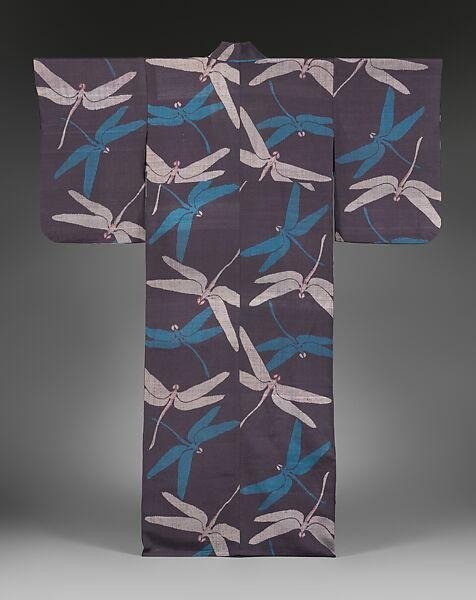
| Modern design | Grace, movement, lightness, transformation | Used in jewelry, fashion, branding, interiors, and illustration |
The table demonstrates an important principle of cultural analysis: the same visual form can carry radically different meanings in different symbolic systems.
Dragonfly Symbolism in Japan
Japan provides one of the clearest historical examples of positive dragonfly symbolism.

7
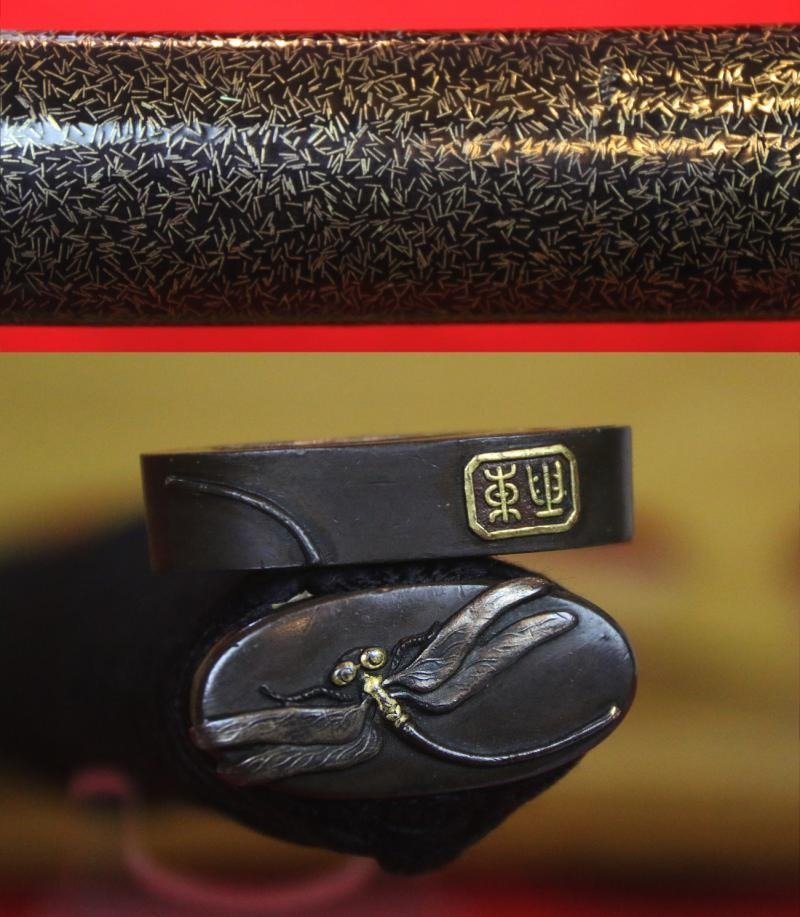
In Japanese culture, dragonflies have long been associated with courage, bravery, strength, and victory. The association became particularly prominent in samurai culture, where dragonfly motifs appeared on sword fittings and other decorative objects. The Metropolitan Museum of Art notes that dragonflies symbolized bravery and were accordingly featured on sword fittings. Dragonflies were also admired as signs of autumn.
This is a fascinating example of symbolism emerging from behavior.
Dragonflies fly forward rapidly and can maneuver with extraordinary agility. Their hunting ability and aerial control made them an appealing metaphor for determination and martial effectiveness.
In Japanese visual culture, therefore, the dragonfly does not simply mean “change.”
It can suggest:
forward movement + courage + victory + seasonal transition.
Dragonfly and Japanese identity
The dragonfly also has a deeper historical relationship with Japan. Classical names for Japan included Akitsushima, traditionally interpreted as “Dragonfly Island,” although the historical and linguistic details surrounding this interpretation require care. The association appears in early Japanese historical tradition.
This makes the dragonfly more than a decorative insect in Japanese cultural history. It can function as a marker of landscape, season, martial values, and national imagination.
Dragonfly Symbolism in Ancient Egypt
One of the most important facts about dragonfly symbolism is that it is not merely a modern New Age invention.
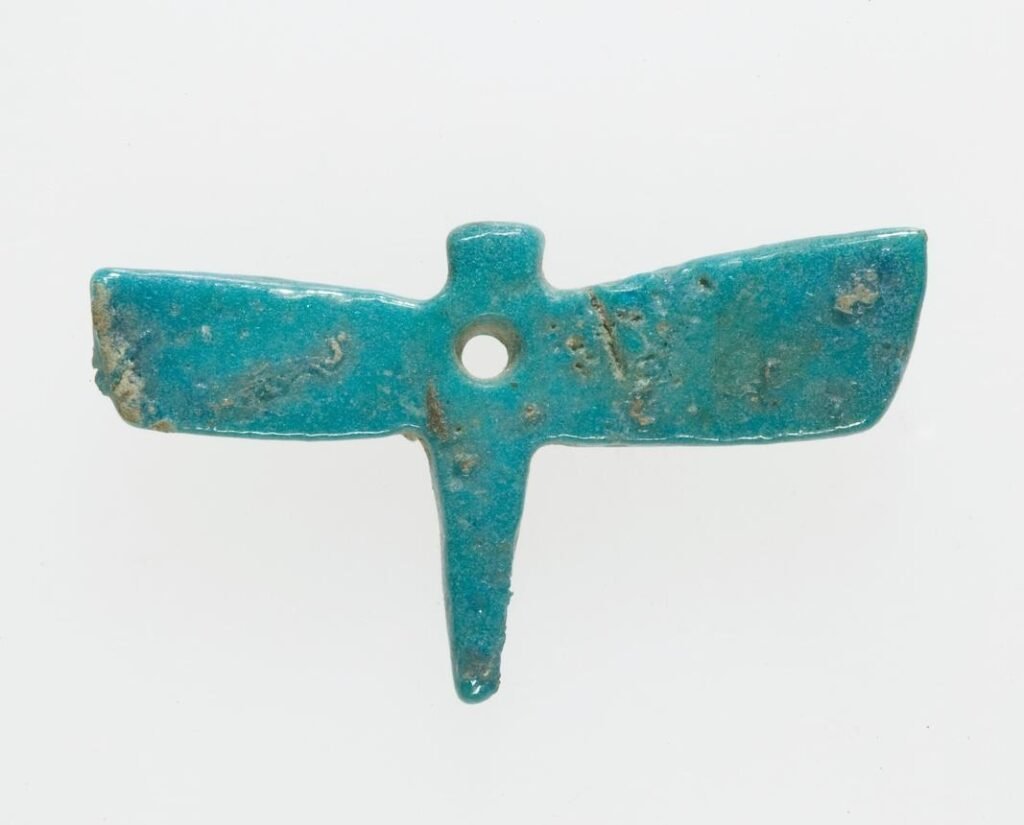
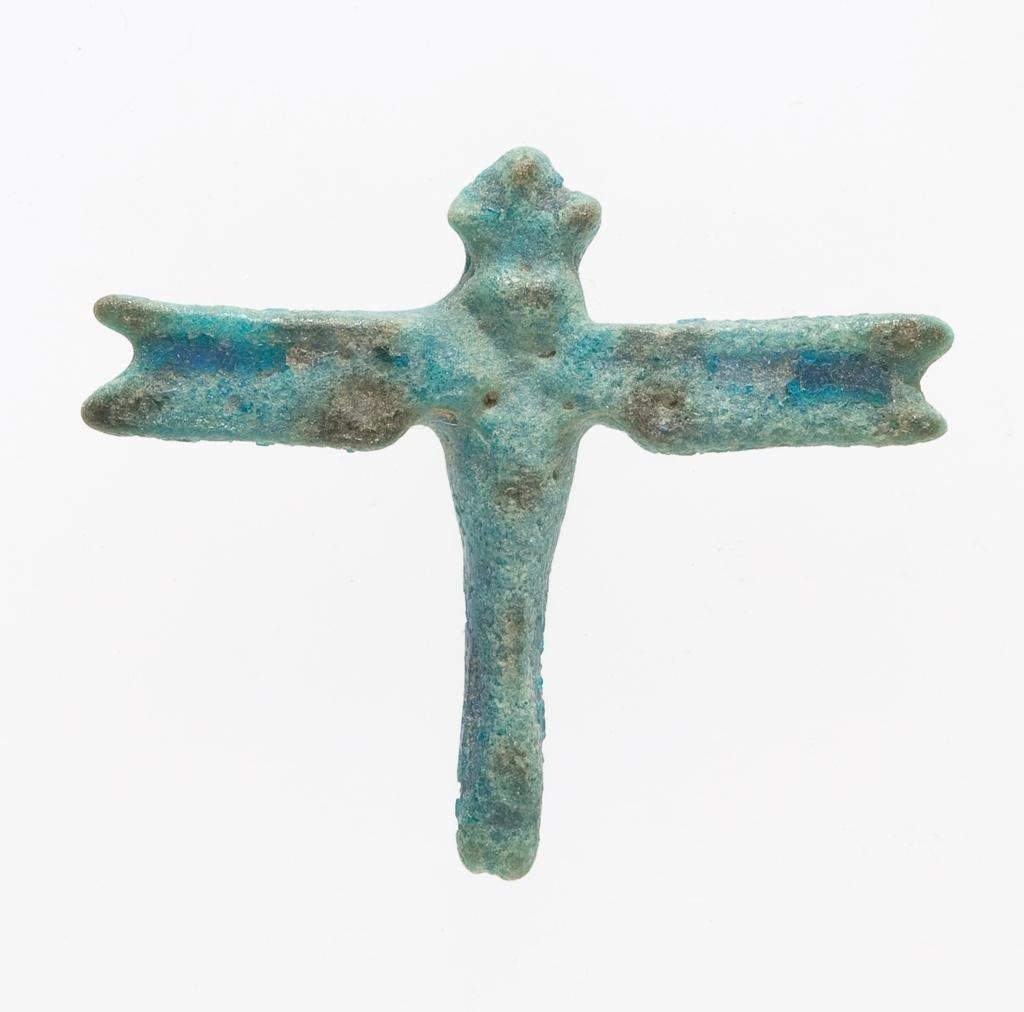
Archaeological evidence demonstrates that dragonfly forms were used in ancient Egypt.
The Metropolitan Museum of Art holds multiple dragonfly amulets from Egypt’s Middle Kingdom. One example dates approximately to 1981–1640 BCE, during Egypt’s 12th–13th Dynasties. Another group includes a string combining fly, star, and dragonfly amulets dating approximately to 1850–1700 BCE.
However, an important scholarly caution is necessary.
The existence of a dragonfly amulet does not automatically prove a specific symbolic meaning.
It is tempting to say that ancient Egyptians used dragonflies specifically to represent rebirth, immortality, or transformation. Those ideas may sound compatible with broader Egyptian symbolism, but unless a reliable textual or archaeological interpretation establishes that particular meaning for the object, presenting it as fact would go beyond the evidence.
This is an excellent example of the difference between:
- archaeological evidence
- historical interpretation
- modern symbolic interpretation
Good symbolism writing should keep all three separate.
Dragonfly Symbolism in Indigenous North American Traditions
Dragonfly imagery also appears in the artistic traditions of Indigenous peoples of North America.
For example, dragonfly motifs are documented in Pueblo and Zuni artistic contexts. A scholarly article on Zuni pottery documents a dragonfly motif on a potsherd from the Hawikuh site dating to the seventeenth century.
Some popular sources describe dragonflies as symbols of water, purity, or transformation among particular Southwestern peoples. However, these claims should be handled carefully.
There is no single “Native American meaning of the dragonfly.”
Native American nations are culturally distinct communities with their own languages, histories, ceremonies, and symbolic systems.
Therefore, saying “Native Americans believe the dragonfly means X” collapses many different cultures into one category.
A more accurate approach is to identify the specific nation, artistic tradition, historical period, and source before assigning a symbolic meaning.
That is not merely an academic technicality. It is part of respectful cultural interpretation.
Dragonfly Symbolism in European Folklore
The Western history of dragonfly symbolism is particularly interesting because it is not uniformly positive.
Some English and American regional names reveal suspicion or fear.
The insect has historically been called names such as “devil’s darning needle,” “darning needle,” “snake doctor,” and “snake feeder.” The American Heritage Dictionary notes that regional English has produced numerous dragonfly names, with some based on shape and others on folk beliefs.
Merriam-Webster records “devil’s darning needle” as a historical term for dragonfly or damselfly, with a first known use dating to 1809.
The contrast is striking.
In one cultural context:
dragonfly = courage and victory
In another:
dragonfly = mysterious or potentially ominous creature
This demonstrates why symbolism cannot be determined simply from the physical appearance of an object.
A culture’s stories teach people how to see the object.
The Psychological Meaning of Dragonfly Symbolism
Psychology does not establish that dragonflies possess supernatural messages.
However, humans naturally use visual symbols to organize experience.
From a psychological and semiotic perspective, the dragonfly offers several highly accessible metaphors.
1. Change
People experiencing transitions may find the dragonfly compelling because its life cycle provides a concrete image of transformation.
2. Identity
The nymph and adult look sufficiently different that the insect can symbolize the idea that identity evolves.
3. Freedom
Wings and flight have long been associated with psychological and artistic ideas of liberation.
4. Perspective
The dragonfly’s aerial movement can metaphorically represent stepping back and seeing a situation from another angle.
5. Impermanence
The adult dragonfly’s comparatively brief visible life can evoke awareness of time and mortality, although lifespan varies among species and the aquatic developmental period may be much longer.
These interpretations are best understood as symbolic associations, not psychological laws.
Dragonfly Spiritual Meaning
In contemporary spirituality, dragonflies are frequently interpreted as symbols of:
- spiritual transformation
- awakening
- renewal
- emotional healing
- connection with nature
- personal growth
- transition
- letting go
- living in the present
- spiritual freedom
Some spiritual traditions and modern practitioners also interpret an unexpected dragonfly encounter as a meaningful sign.
There is, however, an important distinction:
A spiritual interpretation is a belief or personal meaning, not a scientifically established message transmitted by the insect.
That does not make the experience meaningless.
Symbols often function precisely because people assign personal significance to them.
If someone sees a dragonfly while reflecting on a major life transition, the value may lie in the reflection it prompts rather than in proving that the insect objectively delivered a supernatural message.
What Does It Mean When a Dragonfly Appears?
There is no scientifically established universal meaning when a dragonfly appears near someone.
Symbolically, however, people commonly interpret such an encounter as a reminder of:
change, adaptability, freedom, renewal, or paying attention to the present.
A more useful interpretive question is:
“What is changing in my life, and why does this particular symbol resonate with me now?”
That question transforms dragonfly symbolism from superstition into reflective storytelling.
Dragonfly Symbolism and Color Meaning
Color adds another layer of interpretation.
However, color symbolism itself varies across cultures, so these associations should be treated as interpretive rather than universal.
| Dragonfly color | Common modern symbolic association |
| Blue | Calm, communication, clarity, emotional depth |
| Green | Growth, nature, renewal, balance |
| Red | Passion, vitality, courage |
| Purple | Mystery, imagination, spirituality |
| Black | Mystery, strength, elegance, transformation |
| Yellow | Optimism, energy, happiness |
| White | Purity, peace, simplicity |
| Metallic/iridescent | Change, beauty, perception, adaptability |
Why iridescence matters
Dragonflies often appear to change color as light and viewing angle change.
That visual quality makes iridescence particularly suitable for symbolism involving perspective and perception.
The insect has not necessarily changed.
Your view of it has changed.
That provides an elegant metaphor for human experience.
Dragonfly Symbolism in Art and Design
Dragonflies have enormous visual potential.
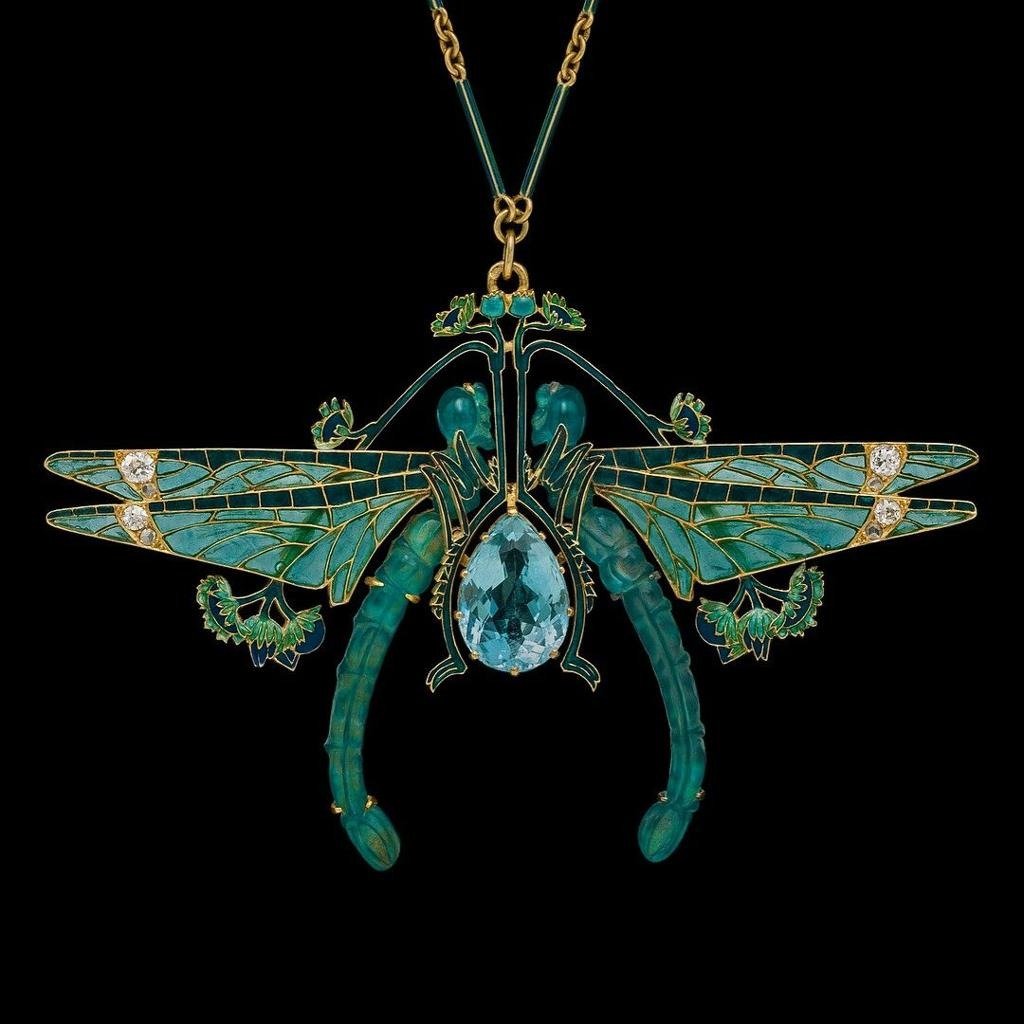
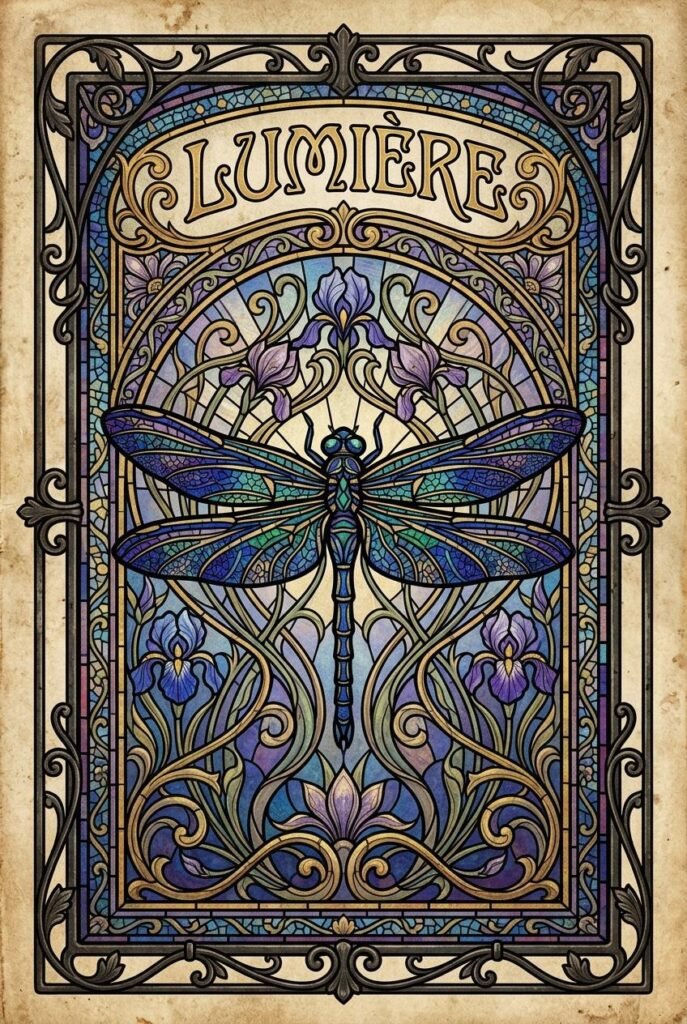
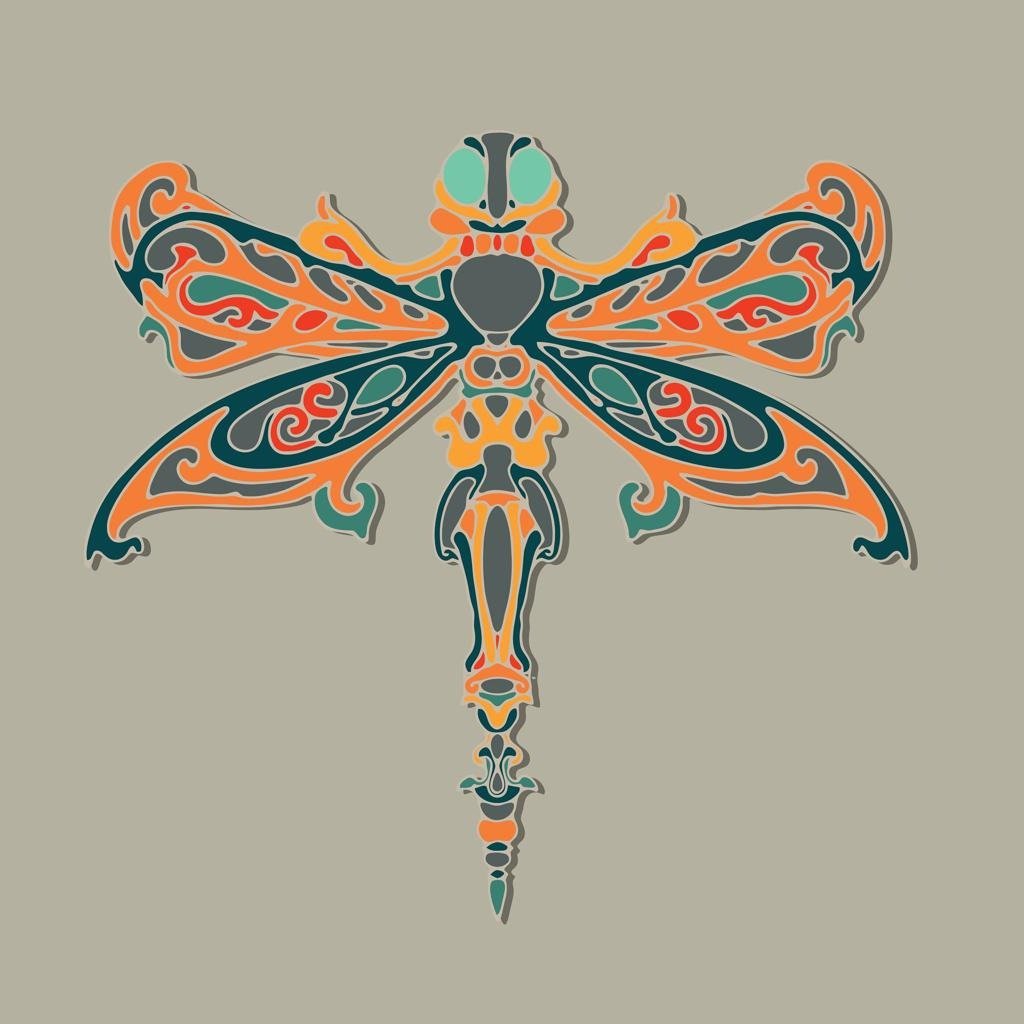
Their elongated bodies, transparent wings, symmetrical structure, and iridescent surfaces make them naturally attractive to artists.
7
Dragonfly motifs have appeared in:
- jewelry
- textiles
- ceramics
- paintings
- illustration
- sculpture
- architecture
- stationery
- tattoos
- interior decoration
- fashion
- product packaging
The Art Nouveau movement, in particular, embraced insect forms and organic lines as decorative motifs.
From a design perspective, the dragonfly communicates several visual ideas simultaneously:
delicacy + movement + symmetry + nature + transformation.
That combination makes it useful when designers want something that feels natural without appearing heavy or static.
Dragonfly Symbolism in Literature
Literature frequently uses insects as compressed metaphors.
A dragonfly can function as a literary symbol for:
- fleeting beauty
- youth
- change
- memory
- freedom
- mortality
- nature
- transition
- emotional awakening
The symbolic power comes from the contrast between its long developmental period and its brief, visible aerial existence.
A writer can introduce a dragonfly without explicitly explaining what it means.
The reader supplies the interpretation.
That is one of the central strengths of literary symbolism:
The symbol can carry emotional information without stating the emotion directly.
Dragonfly Symbolism in Tattoos
Dragonfly tattoos are popular because the symbol supports several interpretations without requiring a single religious commitment.
A dragonfly tattoo may represent:
- surviving a difficult period
- starting a new chapter
- personal transformation
- freedom
- remembrance
- independence
- resilience
- spiritual growth
- connection with nature
Expert Tip
If a dragonfly tattoo has personal significance, consider adding a second visual element rather than relying entirely on generic symbolism.
For example:
- a flower can emphasize growth
- water can emphasize transformation
- a date can represent a life transition
- initials can create personal remembrance
- geometric elements can shift the design toward modern minimalism
The result becomes a personal visual language rather than a generic symbol.
Dragonfly Symbolism in Branding and Consumer Psychology
The dragonfly can also function as a strategic brand symbol.
A company might use dragonfly imagery when it wants consumers to associate its identity with:
- agility
- transformation
- innovation
- elegance
- nature
- freedom
- lightness
- adaptability
For example, a wellness brand might emphasize transformation, while an environmental organization might focus on freshwater ecosystems.
The same dragonfly therefore communicates different brand narratives depending on surrounding typography, color, photography, and language.
This illustrates a principle from semiotics:
Meaning is produced by relationships between signs, not by isolated images alone.
A dragonfly beside soft watercolor imagery communicates something different from a dragonfly rendered in metallic black beside aggressive typography.
Dragonflies and Environmental Meaning
There is another modern meaning that is grounded not in mythology but ecology.
Dragonflies are closely associated with freshwater ecosystems because their immature stages develop in water. Scientists can use dragonflies and other aquatic organisms in ecological monitoring, and dragonflies can provide information about environmental conditions. National Geographic notes that dragonflies are considered useful bioindicators because they depend on relatively stable freshwater environments.
This gives the dragonfly a contemporary symbolic meaning that is increasingly important:
environmental health.
The dragonfly can represent the relationship between clean water, biodiversity, habitat conservation, and ecological resilience.
This is particularly powerful in environmental communication because the insect visually connects two worlds:
water below + air above.
Did You Know?
- Dragonflies are found on every continent except Antarctica.
- Their aquatic nymphs can live for years before becoming adults.
- Dragonflies undergo incomplete rather than complete metamorphosis.
- Dragonflies are predators that consume insects including mosquitoes and flies.
- Ancient Egyptian dragonfly amulets date back thousands of years.
- Japanese artistic traditions have used dragonflies as symbols of bravery and incorporated them into sword fittings.
Myth vs. Fact
| Myth or assumption | Fact-based perspective |
| Dragonflies universally symbolize transformation | Transformation is a common modern interpretation, but symbolism varies culturally |
| A dragonfly appearing near you is objectively a spiritual sign | There is no scientific evidence establishing universal supernatural messages |
| Dragonflies are a type of butterfly | They are different insect groups |
| Dragonflies go through a butterfly-like chrysalis | Dragonflies have incomplete metamorphosis and no pupal stage |
| Ancient Egyptian dragonfly amulets prove a specific “rebirth” meaning | The amulets are archaeological evidence, but their exact symbolic meanings should not be invented |
| All Indigenous cultures share one dragonfly symbolism | Indigenous nations and traditions have distinct histories and meanings |
Common Mistakes When Interpreting Dragonfly Symbolism
Mistake 1: Treating one meaning as universal
There is no single dictionary definition for cultural symbolism.
Mistake 2: Confusing spirituality with science
A spiritual interpretation can be meaningful without being scientifically demonstrated.
Mistake 3: Generalizing Indigenous traditions
Avoid phrases such as “Native Americans believe…” unless discussing a specific community and reliable source.
Mistake 4: Assuming archaeological objects explain themselves
Finding an ancient dragonfly image proves that people used the motif. It does not automatically reveal what every individual associated with it.
Mistake 5: Ignoring context
A dragonfly on a samurai sword fitting and a dragonfly in a modern wellness logo may look similar but communicate very different ideas.
Practical Applications of Dragonfly Symbolism
Understanding the symbol can be useful beyond curiosity.
In personal reflection
Use the dragonfly as a prompt when considering a major transition:
What version of myself am I leaving behind?
In education
Dragonflies provide an excellent way to connect biology with:
- ecology
- life cycles
- environmental science
- mythology
- art
- cultural studies
- symbolism
In branding
Use the motif when concepts such as agility, renewal, nature, or transformation are central to the brand story.
In visual communication
A dragonfly can quickly communicate ideas of lightness, nature, movement, and change.
In storytelling
A dragonfly can serve as a recurring motif that signals a character’s changing identity.
In conservation
Dragonfly imagery can help communicate freshwater protection and biodiversity.
A Philosophical Reading of the Dragonfly
The deepest dragonfly symbolism may be less about “becoming someone new” and more about recognizing that change is already part of existence.
The dragonfly’s life demonstrates continuity through difference.
The nymph and adult appear radically different, yet they are the same organism at different stages.
That offers a useful philosophical metaphor:
Change does not necessarily mean becoming a completely different self.
Sometimes transformation means revealing possibilities that were present all along.
The dragonfly therefore works particularly well as a symbol of becoming without erasing.
Its past is not meaningless simply because its present looks different.
Why Dragonfly Symbolism Remains Relevant Today
Dragonfly symbolism survives because the metaphor remains remarkably compatible with modern life.
People routinely experience:
- career changes
- relocation
- relationships beginning and ending
- personal reinvention
- technological disruption
- changing social identities
- environmental uncertainty
- recovery after hardship
In a world characterized by rapid change, the dragonfly provides a visually simple way to talk about adaptation.
It also bridges seemingly opposite ideas:
strength and delicacy
water and air
stillness and movement
fragility and resilience
past and future
individual identity and environmental connection
That flexibility explains why the symbol continues appearing in tattoos, jewelry, literature, branding, artwork, spiritual practice, and popular culture.
Key Insights
- Transformation is the most widespread modern interpretation of dragonfly symbolism.
- Japanese tradition gives the dragonfly particularly strong associations with courage, bravery, victory, and autumn.
- Archaeological dragonfly amulets demonstrate that dragonfly imagery has a very long history, including ancient Egypt.
- European and American folklore has sometimes portrayed dragonflies negatively, demonstrating that symbolism is culturally constructed.
- Modern spiritual meanings should be distinguished from scientifically established facts.
- Dragonflies have genuine ecological significance because their life cycles depend on freshwater environments.
- Color, artistic style, historical context, and surrounding imagery can dramatically change a dragonfly’s symbolic meaning.
- There is no single universal “dragonfly meaning.” Context is essential.
Frequently Asked Questions About Dragonfly Symbolism
What is the spiritual meaning of a dragonfly?
The dragonfly is commonly interpreted spiritually as a symbol of transformation, renewal, freedom, adaptability, and personal growth. In contemporary spiritual practices, seeing a dragonfly may be interpreted as encouragement to embrace change or move into a new stage of life. These interpretations are matters of belief and personal meaning rather than scientifically established messages.
What does a dragonfly symbolize in Japanese culture?
In Japanese culture, the dragonfly has historically been associated with courage, bravery, strength, victory, and autumn. Dragonfly imagery appeared in Japanese art and on samurai sword fittings, where the insect’s associations with bravery made it an appropriate martial motif.
Does a dragonfly symbolize transformation?
Yes, transformation is one of the most common modern meanings associated with the dragonfly. The interpretation is strongly connected with its life cycle: dragonflies begin life as aquatic nymphs and later emerge from the water as winged adults. Because the change is biologically dramatic, the insect provides a natural metaphor for personal growth and transition.
What does it mean when a dragonfly lands on you?
There is no scientifically established universal meaning when a dragonfly lands on someone. Symbolically, a person may interpret the encounter as representing change, awareness, freedom, renewal, or a meaningful transition. The most appropriate interpretation depends on the individual’s cultural background and personal circumstances.
What does a dragonfly symbolize in dreams?
In modern dream interpretation, dragonflies are often associated with transformation, freedom, emotional change, adaptability, and a new perspective. However, dream symbolism is not universal or scientifically fixed. The dragonfly’s meaning in a dream can depend on what it was doing, how the dreamer felt, and the broader context of the dream.
Are dragonflies a symbol of good luck?
In some cultural and contemporary symbolic traditions, dragonflies are viewed positively and associated with courage, victory, happiness, renewal, or favorable change. Japanese cultural history provides a particularly strong example of positive dragonfly symbolism. However, beliefs differ across cultures, and some historical European folklore treated dragonflies with suspicion rather than as lucky creatures.
Final Takeaways
Dragonfly symbolism is powerful precisely because it does not have only one meaning.
Its biological life cycle makes transformation an intuitive metaphor, while its extraordinary flight makes freedom, agility, and adaptability natural symbolic associations. Japanese traditions add courage, victory, strength, and seasonal meaning, while archaeological evidence demonstrates that dragonfly imagery existed thousands of years ago in ancient Egypt. Other folk traditions have interpreted the insect much more cautiously or negatively.

Emily Johnson is an experienced American content writer focused on creating clear, useful, and reader-friendly articles that inform and inspire audiences.
